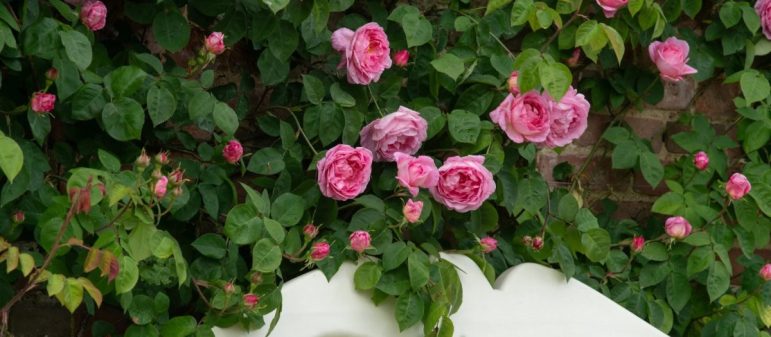
As the gardening world gathers this week for the Chelsea Flower Show, some of the UK’s best-loved rose gardens are already in full bloom, weeks ahead of their traditional peak, according to the National Trust.
At Mottisfont, home to one of the country’s most celebrated collections of old-fashioned roses, gardeners say the display is expected to peak between mid and late May this year, rather than in June as it once reliably did.
The unusually early flowering has been linked to a mild, wet winter followed by warm spring temperatures, conditions that shortened the roses’ dormant period and accelerated growth across many gardens in southern England.
The shift has become increasingly noticeable over recent decades. When the rose garden at Mottisfont was donated to the National Trust in June 1972, it was at its flowering peak at the end of the month. Head gardeners now estimate that peak flowering has moved forward by roughly one day every two and a half years.
Rob Ballard, Head Gardener at Mottisfont, described this spring as one of the most dramatic examples yet.
“After a very wet, warm winter, including 42 consecutive days of rain at the start of the year, the roses got off to an early start. Then warm spells in April accelerated growth, and this year they’re flowering earlier than we can remember.”
Among the early stars this season are ‘Lady Hillingdon’, known for its golden, tea-scented blooms, and the richly coloured bourbon rose ‘Great Western’, both flowering ahead of schedule.
According to the National Trust then changing climate is also altering how historic gardens are managed. At Mottisfont’s 1.5 acre walled garden, which contains more than 1,000 rose plants and nearly 500 varieties, gardeners are focusing on soil health and moisture retention to help plants cope with increasingly unpredictable weather.
“We’ve mulched the whole garden to lock in water, suppress weeds and build organic matter in the soil,” Ballard explained. “It supports everything from the roses themselves to the worm population beneath them.”
Elsewhere in southern England, similar patterns are emerging. At Buckland Abbey and Chartwell, gardeners report roses flowering two to three weeks earlier than in previous decades.
At Chartwell, Gardens & Outdoor Manager Christopher Lane said the first rose appeared as early as March this year, following what he described as a notably warm and frost-free start to the season.
However, the picture is not uniform across the country. In northern gardens such as Wentworth Castle Gardens and Lindisfarne Castle, cooler and wetter conditions mean flowering remains closer to traditional timings.
National Trust horticultural specialist Rebecca Bevan said roses are particularly responsive to mild winters and sunny springs, but warned that longer-term challenges are becoming more serious.
“The bigger concern is water availability,” she said. “Research shows that drought poses the greatest threat to roses, so we’re focusing on building healthy soils, choosing tougher varieties and investing in water capture and storage.”
The Trust says its gardening teams are increasingly adapting historic landscapes to cope with climate change and biodiversity loss, using methods such as mulching, underplanting and reducing reliance on chemicals.
For visitors inspired by the displays at Chelsea this week, the message from gardeners is simple: if you want to catch Britain’s roses at their best, don’t wait until June.
Rose Growing Tips
- Water deeply rather than little and often, especially during dry spells.
- Mulch around roses in spring to retain moisture and improve soil health.
- Deadhead faded blooms regularly to encourage repeat flowering.
- Feed roses after their first flush of flowers with a balanced rose fertiliser.
- Plant roses in a sunny, well ventilated spot to reduce disease risk.
- Choose resilient varieties suited to changing weather conditions and periods of drought.
Source: National Trust