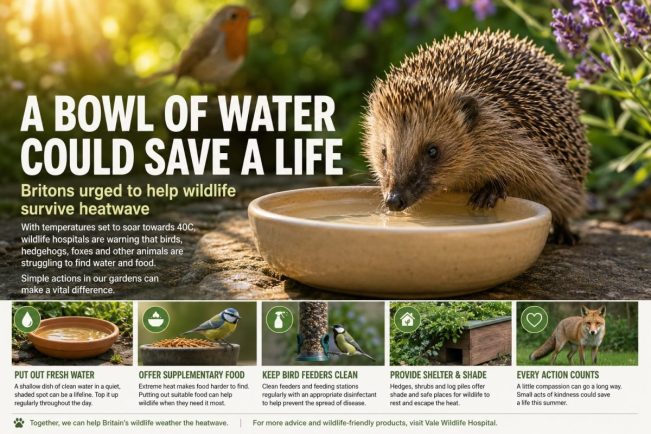
Britons are being urged to spare a thought for the country’s wildlife as temperatures climb towards 40C in parts of the UK, creating potentially dangerous conditions for birds, hedgehogs, foxes, badgers and other wild animals.
While people can seek shelter indoors, switch on fans and reach for cold drinks, many wild creatures are left exposed to the relentless heat, struggling to find water and food as natural sources dry up.
Wildlife rescue centres across the country are warning that prolonged periods of extreme weather can have devastating consequences for animals already facing numerous pressures. Dehydration, exhaustion and heat-related stress can quickly become life-threatening, particularly for young animals.
Experts say that simple actions taken by householders can make a significant difference during the hottest days of the year.
One of the most effective ways to help is by putting out fresh water in gardens, parks and other outdoor spaces. A shallow dish of clean water placed in a quiet, shaded area can provide a vital lifeline for thirsty wildlife. Birds, hedgehogs, squirrels, foxes and countless insects can all benefit from access to drinking water during periods of extreme heat.
Wildlife specialists recommend checking and refilling water containers regularly throughout the day, particularly during the hottest periods.
Gardeners are also being encouraged to think carefully before tidying away natural shelter. Overgrown corners, shrubs and hedges can provide valuable shade where animals can escape the midday sun.
Food can become harder to find during prolonged dry spells, particularly for species that rely on insects, worms and other creatures affected by drought conditions. Supplementary feeding can therefore provide valuable support, especially for birds and hedgehogs.
However, experts stress that hygiene is particularly important during warm weather. Bird feeders, feeding tables and water stations should be cleaned regularly to reduce the risk of diseases spreading among garden bird populations.
The warning comes as wildlife hospitals prepare for an increase in heat-related admissions. Young birds can become dehydrated if nests are exposed to direct sunlight, while hedgehogs and other mammals may travel further in search of water, increasing the risk of injury.
Conservationists say the public should also be alert for signs of distress. Animals that appear unusually lethargic, collapsed or unable to move may require assistance from a wildlife rescue organisation.
The UK’s wildlife has already faced a challenging year, with habitat loss, pollution and weather patterns placing increasing pressure on many species. Extreme heat adds yet another challenge for animals that have no choice but to endure the conditions.
Fortunately, helping can be remarkably simple.
A bowl of water, a little extra food and a shaded corner of the garden may seem like small gestures, but for an exhausted animal searching for relief from the heat, they could mean the difference between life and death.
As temperatures continue to rise this week, wildlife experts are urging people across the country to take a few moments to help the creatures sharing their gardens and communities.
In a heatwave, they say, compassion can be as important as conservation. Thank you for caring!