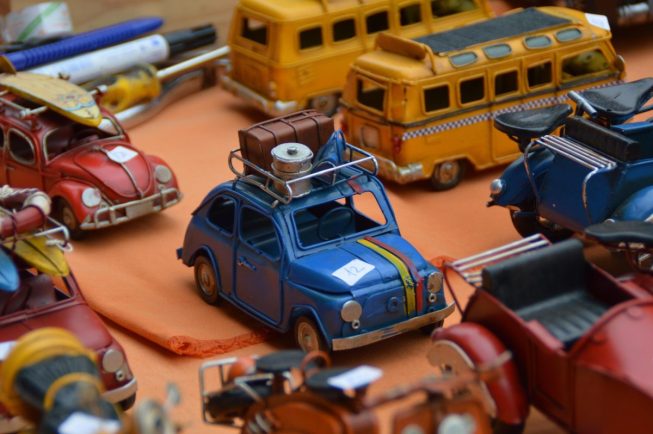
A collection might start with a box of old postcards, a shelf of model cars, a row of vintage teacups or a single badge picked up on a day out. Then, almost without noticing, one object becomes three, three becomes a display, and the display becomes a small story about the person who owns it.
That is why collecting never really goes away.
Around Malvern, the appeal is easy to understand. Flea fairs, antique stalls, charity shops, local markets and showground events all offer that little thrill of possibility. You never quite know what you are going to find.
Old Treasures and New Favourites
Traditional collecting has always had a strong pull. People love objects with a past, especially when they feel local, handmade, unusual or slightly mysterious.
The charm of a flea fair is that everything has already lived a life before reaching the table. Even the most ordinary item can feel full of clues.
But today’s collectors are not only looking backwards. They are also collecting the culture happening around them right now.
That might mean vinyl records, film posters, trading cards, limited-edition toys, enamel pins, character keyrings, retro games, branded mugs, art prints or Funko Pop! figures. The shelves that once held china figurines and matchbox cars might now sit alongside superhero figures, anime characters, fantasy memorabilia and carefully kept pieces from favourite franchises.
The principle is the same. The style has changed.
Collectors have always wanted objects that say something about who they are. The difference now is that modern fandom gives people more ways to express it. A collection can be nostalgic, funny, stylish, sentimental or proudly geeky, all at once.
Nostalgia Has Become More Sociable
For a long time, collecting was often thought of as a private hobby. It happened in spare rooms, cabinets, garages and carefully labelled boxes.
People now share their finds online. They build display shelves in living rooms. They hunt for limited drops, complete character sets and swap duplicates with other fans. What used to be tucked away is now part of everyday identity.
The Joy Is in the Hunt
Ask most collectors what they enjoy most and the answer is rarely just “owning the item”. More often, it is the search.
That is why fairs and markets still matter. Online shopping may make rare items easier to find, but it cannot fully replace the pleasure of wandering from stall to stall, spotting something half-hidden, turning it over, asking a question and deciding whether it belongs with you.
There is also a rhythm to it. Collecting asks people to slow down. Look closely. Compare details. Learn makers, marks, editions, dates and condition. Even casual collectors become quiet experts in their chosen corner of the world.
That expertise can be part of the fun. One person knows 1970s annuals. Another knows ceramics. Someone else can identify a film figure from the shape of a silhouette. Another can tell whether a pin is from a limited run. Every collection creates its own little language.
Why Modern Objects Can Still Matter
It is easy to assume that only old things are worth collecting, but museums and cultural institutions have long understood that everyday objects can become important records of how people live. The V&A’s Rapid Response Collecting project, for example, looks at contemporary objects connected to design, manufacturing and social change.
Today’s popular objects can become tomorrow’s cultural markers. A concert wristband, a limited-edition toy, a gaming collectible or a festival poster may not seem historic now, but it can capture a very specific moment in taste, technology and identity.
Collectors often understand this instinctively. They are not always thinking about future value. Sometimes they are simply preserving a feeling before it disappears.
Small Objects, Big Stories
A collector sees meaning where someone else sees a box of odds and ends. They notice the design, the story, the character, the place or the memory attached to an object. They give it space. They keep it safe. They let it say something.
That is why collecting is having a moment again. In a fast, digital, often forgetful world, objects still give people something to hold on to.
Sometimes that object is rare. Sometimes it is valuable.
Sometimes it simply feels like yours.
Article written by Commerce Tuned