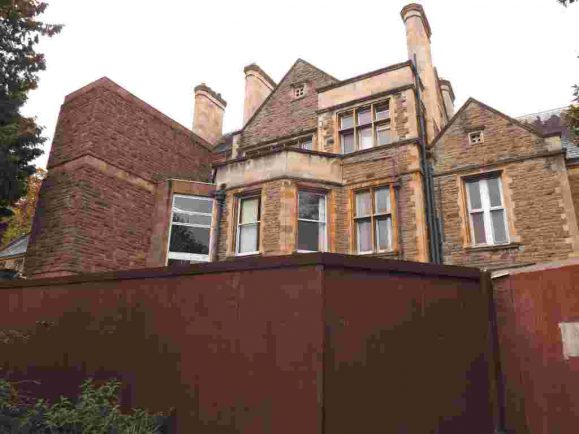
A CAMPAIGN to make Malvern’s former hospital a listed building has been rejected by the Government.
People behind the bid had hoped the historic building on Lansdowne Crescent would be given the special status to stop its planned demolition as part of a new care home development.
A petition calling for the 104-year-old building to be preserved had racked up almost 500 signatures, with members of
Malvern Civic Society claiming it had ‘architectural merit’ and was one of the most attractive areas in Malvern.
However, the rejection by the Department of Culture, Media and Sport (DCMS) has paved the way for developer Montpelier Estates to submit an application to Malvern Hills District Council (MHDC).
A DCMS spokeswoman said: “Having considered advice from Historic England, it has been decided that Malvern Hospital does not meet the special architectural or historic interest requirements necessary for listing.”
The Community Hospital in Malvern opened in 1911 but closed almost a Century later in 2010 when it was replaced by its new home on Worcester Road.
But the refusal has led the civic society to call on district councillors to reject the proposals when they go before the planning committee.
Clive Hooper, chairman of Malvern Civic Society, said “It is disappointing news, particularly as there was strong support for its listing from Historic England and the Victorian Society.
“The main reason for not listing appears to have been that the old hospital, although designed by a noted architect, has strong local rather than national interest.
“The Civic Society recognises the local importance of the old hospital building, and this is reflected by the building’s submission to MHDC earlier this year, together with other properties, for consideration for its Local Listing.
“We also recognise the importance which MHDC has attached to preserving the building. We now need the councillors on the committee to endorse the officer’s recommendations.”
Bosses at Montpelier Estates said they will push on with their plans through the planning process.
Director James McGarry said: “Clearly we would not have considered the site for development as a care home, which cannot be accommodated in a converted building, if we thought the existing premises had any historic architectural merit or a commercially viable conversion solution.
“We do, of course, understand local resistance to change but our experience is that once new care homes are completed they integrate perfectly providing quality services, capital investment and local employment.
“A care home solution is sympathetic and sensitive to existing local residential development and offers a pragmatic and welcome solution to difficult, derelict and often unsightly urban buildings which are no longer fit for purpose.”