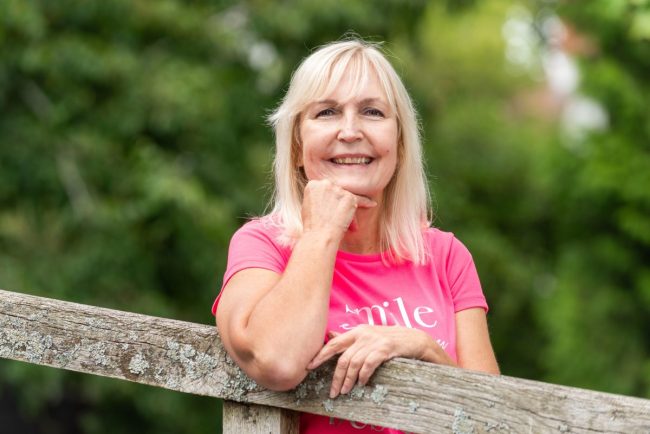
A WORCESTERSHIRE carer who says she’s lucky to be alive after dismissing cancer symptoms as a sign of the menopause is launching a new charity campaign to save lives.
Amanda Price, originally from West Bromwich and now living in Malvern, was diagnosed with an advanced form of endometrial cancer in December 2018 after her GP pushed for tests.
Amanda, now 58, is urging people to support a new campaign that shines a light on the impact cancer breakthroughs can have on the lives of those diagnosed with cancer.
She believes she owes her life to a drug called Carboplatin which Cancer Research UK helped to develop, and is now backing the charity’s ‘Together We Are Beating Cancer’ campaign.
Amanda thought she was in the midst of her menopause when she was diagnosed with her cancer in December 2018.
She’d just given up her job as a carer and moved to Fernhill Heath to look after her mum full time.
Ten months earlier she had dismissed heavy and irregular bleeding alongside tiredness as ‘normal’ body changes but, after a drop in energy levels and a dramatic increase in bleeding, she made an appointment to see the GP.
Amanda was referred to hospital where she was diagnosed with polycystic ovary syndrome, and a condition called complex hyperplasia (with atypia) which can sometimes develop into cancer.
She had a coil fitted which seemed to alleviate her symptoms and specialists reassured her that everything looked clear.
But with a family history of cancer, her GP didn’t want to take any chances.
Later on, successful treatment meant that she was able to continue caring for her mum Ross in Fernhill Heath before she died in May this year.
Now she has returned to work full time as a carer in Malvern and enjoys meeting friends and going to the gym.
Amanda said: “The number of lives that have been saved in the region shows the immense power of research and I know this better than most.
“Research into better treatments gave me the greatest gift – more time with my mum.”
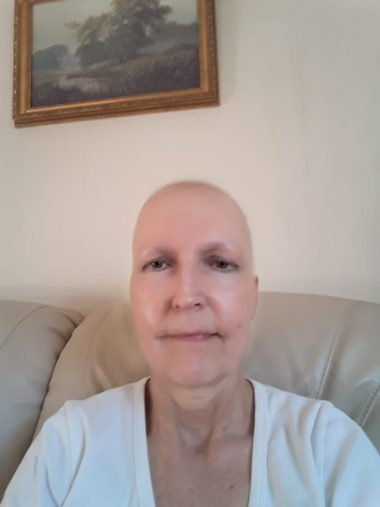
Amanda during treament. s
Her call comes as data released by Cancer Research UK today (1 September) reveals around 1.2 million deaths have been avoided in the UK since the mid-1980s, due to advances in cancer prevention, diagnosis and treatment.
Over the last four decades, UK cancer mortality rates have fallen by around a quarter, after peaking in 1985 for men and 1989 for women.
Had rates stayed the same, it is estimated that around 106,000 more lives would have been lost in the West Midlands and Worcester regions.
Amanda added: “I’m so grateful to my GP who wanted to continue investigations after I was discharged from hospital.
“I was completely shocked and worried about how I was going to look after mum during my treatment which I knew would be tough.
“I just wanted to be well for mum, so I focused on her.
“The scariest thing was when my hair began to fall out.
“I was washing it after chemotherapy, and it was sticking to the rest of my hair that was still attached.
“I thought I can’t cry because that will upset mum.
“Having her to focus on her made me stronger and I just took a deep breath, got some scissors and cut the rest of my hair really short.”
Amanda underwent eight months of treatment involving chemotherapy and two types of radiotherapy at Cheltenham Hospital, all while continuing to care for her mum.
“I’m so grateful for the treatment that saved my life but sadly, not everyone diagnosed with cancer will reach key milestones – and that’s why Cancer Research UK’s work is so vital”, Amanda said.
“I wouldn’t be here without the scientists who strive to find new ways to outsmart cancer and the incredible fundraisers who make it all possible.
“So, now I’m determined to do what I can to show my support. I hope I can inspire other people to do the same.”
Cancer Research UK spokesperson for the West Midlands, Paula Young, said: “Thanks to the generosity and commitment of our supporters, together, we are beating cancer.
“Our research breakthroughs mean every day, people are being diagnosed earlier, have access to kinder and more effective treatments, and some cancers are prevented completely.
“As our new campaign shows, this all adds up to more moments with the people we love – and we’re grateful to Amanda for sharing her own experience.
“By donating, fundraising, taking part in one of our Shine Night Walks, or volunteering at our shops, they could fund new discoveries that will help more people reach the life-changing moment when their doctor says: ‘It’s gone.’”
As part of the campaign, people are also being invited to share their personal moments, either of their own cancer journey or that of a loved one, through a dedicated photo-wall and on social media by using #MoreMoments.
Visit: cruk.org/donate to donate.